

If your doctor wants more information beyond a conversation, they may suggest one of a few common, generally straightforward tests. Knowing what to expect can make them feel far less intimidating.
Most period-related visits involve one or two of these, if any at all.
What Each One Involves
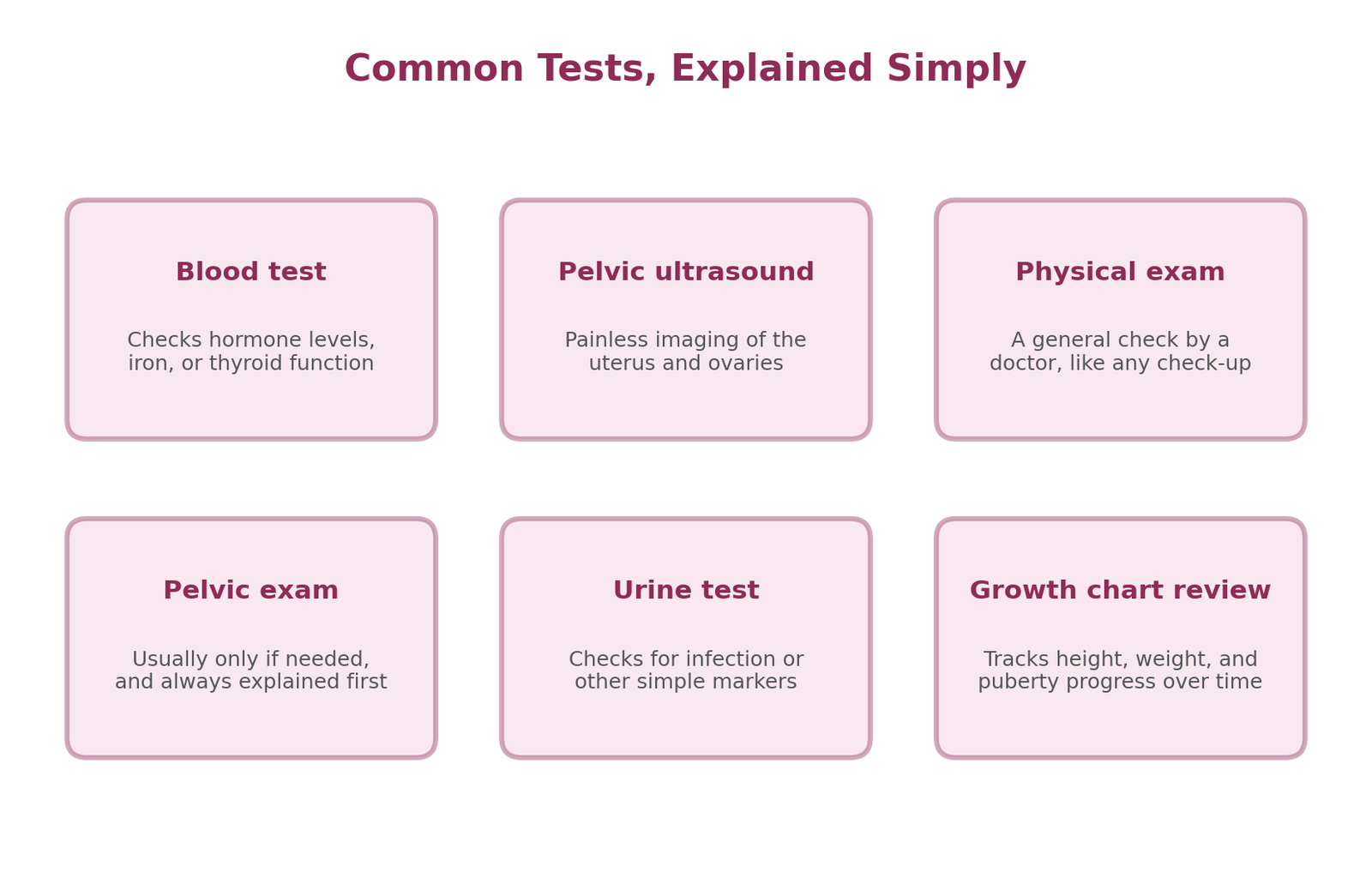
- Blood test: a quick sample taken from your arm, checks hormone levels, iron levels, or thyroid function.
- Pelvic ultrasound: a painless imaging scan (using sound waves, not X-rays) that lets a doctor see the uterus and ovaries.
- Urine test: a simple sample used to check for infection or other basic markers.
- Physical or growth check-up: height, weight, and general puberty progress, similar to a routine check-up.
A pelvic exam (a physical check of the reproductive organs) is uncommon for teenagers unless there's a specific reason for it, and a doctor will always explain what it involves and why before proceeding. You can ask questions or request a parent be present at any point.
It's Okay to Ask Questions
- Before any test, it's completely reasonable to ask your doctor what it involves, why it's needed, and what happens with the results.