

Understanding the names and jobs of your body parts isn't awkward, it's empowering. Doctors, nurses, and this book will use the correct terms so that you can describe what you're feeling clearly and confidently.
The External Parts (the Vulva)
The vulva is the general name for all the parts you can see on the outside. People sometimes use the word "vagina" to describe this whole area, but the vagina is actually just one part on the inside. The vulva includes:
- Labia: soft folds of skin that protect the opening to the vagina and urethra.
- Clitoris: a small, sensitive area near the top of the vulva.
- Urethral opening: where urine (pee) exits the body, separate from the reproductive system.
- Vaginal opening: the entrance to the vagina, where menstrual blood exits and where a tampon, if you choose to use one, would be placed.
The Internal Parts
- Vagina: a muscular tube connecting the outside of the body to the cervix and uterus.
- Cervix: the narrow, lower part of the uterus that connects to the vagina.
- Uterus (womb): a pear-shaped, muscular organ where the lining builds up each month and sheds during a period.
- Fallopian tubes: two narrow tubes, one on each side, that carry an egg from the ovary toward the uterus.
- Ovaries: two small organs that store eggs and produce important hormones.
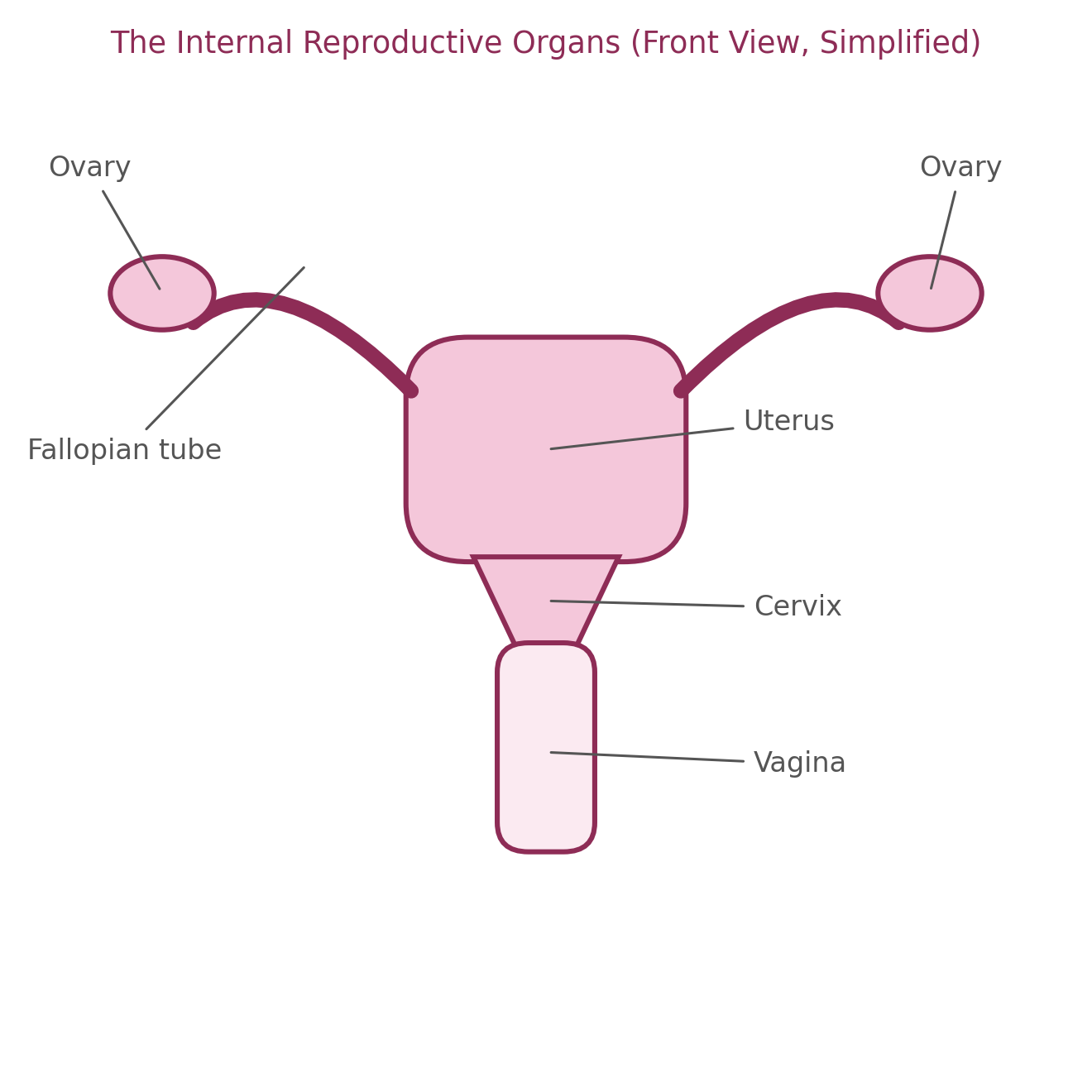
A simplified front view of the internal reproductive organs.
Every one of these parts works together, guided by hormones, to create the menstrual cycle you'll learn about in the coming chapters.
Why the Right Words Matter
- Using accurate names isn't clinical or cold, it's practical. If you ever need to describe a symptom to a doctor, knowing the correct term helps them understand you quickly.
- It's completely normal to feel a little giggly or awkward the first time you read these words out loud. That feeling fades with familiarity.