

Almost everything in this book falls into the category of "normal" or "worth a routine doctor's visit." A very small number of signs, though, need faster attention. This chapter is here so you'd recognize them, not to cause worry.
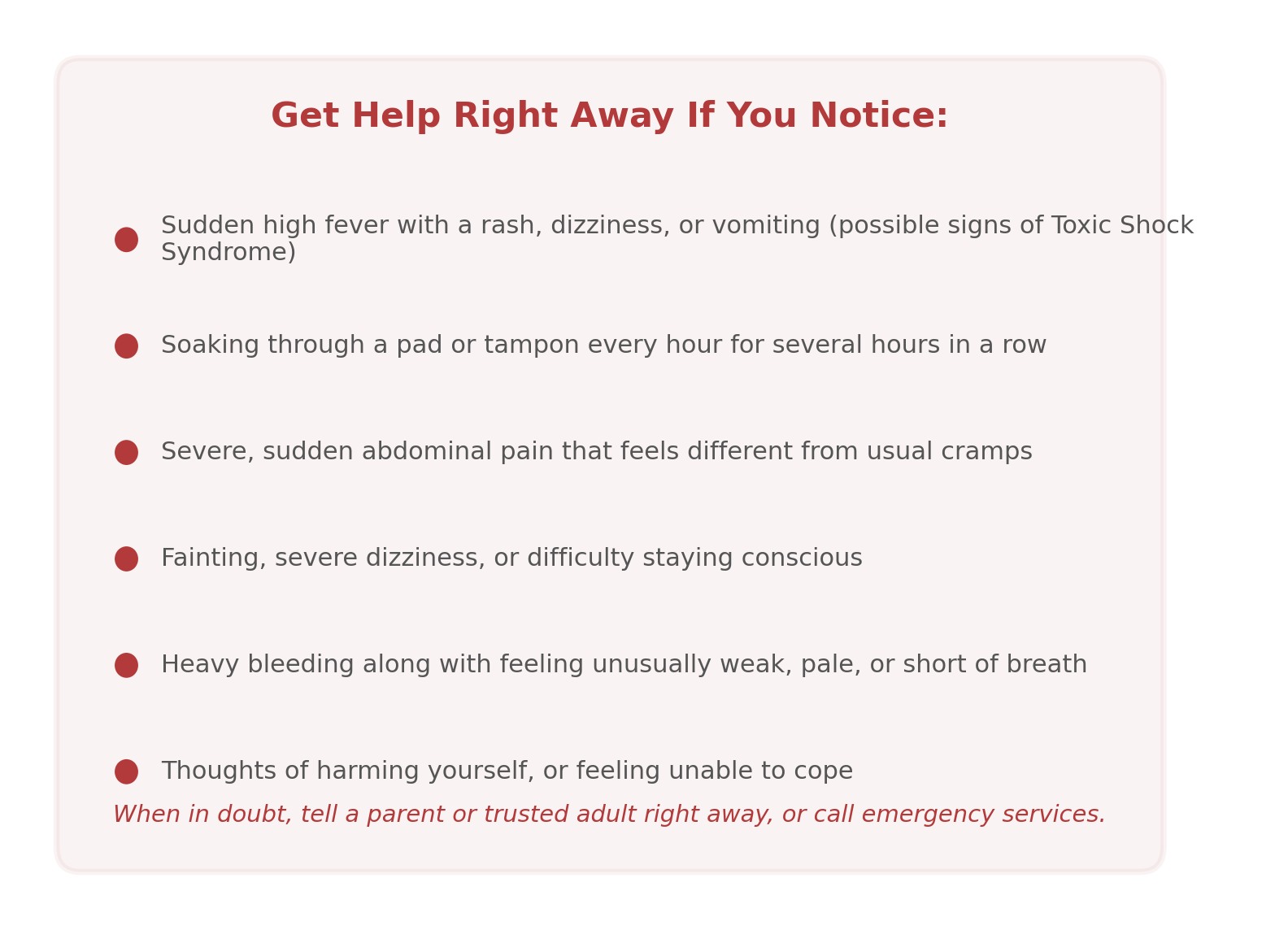
Rare, but important to recognize.
What to Do
- Tell a parent or trusted adult immediately, don't wait to see if it passes.
- If an adult isn't immediately available and something feels seriously wrong, call your local emergency number.
- If a tampon is in place and any signs of Toxic Shock Syndrome appear (sudden high fever, rash, dizziness, vomiting), remove it right away and seek care immediately.
A Final Word
- These situations are uncommon. Most people go their whole lives without ever experiencing one. Knowing the signs isn't about living in worry, it's about being prepared, the same reason you'd learn basic first aid.
- If you are ever having thoughts of harming yourself, please tell a parent, doctor, teacher, or trusted adult right away, or contact a crisis helpline in your country. You deserve support, immediately and always.
PART VII Resources
This last part is meant to be used, not just read. Flip back to it whenever you want to double-check a myth, look up a word, or jot down what's happening with your own cycle.
Medical Sources & References
- U.S. Food and Drug Administration (FDA). The Facts on Tampons—and How to Use Them Safely.(FDA)
- National Institute for Health and Care Excellence (NICE UK). Heavy menstrual bleeding: assessment and management (NG88).(NICE UK, ID: NG88)
- American College of Obstetricians and Gynecologists (ACOG). FAQs: Heavy Menstrual Bleeding.(ACOG)
Educational Health & Safety Notice
Period Talk provides general educational health information only and is not a substitute for professional medical advice, diagnosis, or treatment. Always consult a qualified healthcare provider for personalized medical concerns.
Authority & Emergency: Aligned with evidence-based guidelines from international health organizations (ACOG, NHS, WHO, FOGSI). If you think you may be experiencing a medical emergency, seek urgent medical care or contact your local emergency service immediately.