

Growing up brings big feelings, sometimes several in the same afternoon. That's not a flaw in you, it's what happens when your body, brain, hormones, and life all change at once. Taking your mental health seriously is just as important as taking your physical health seriously.
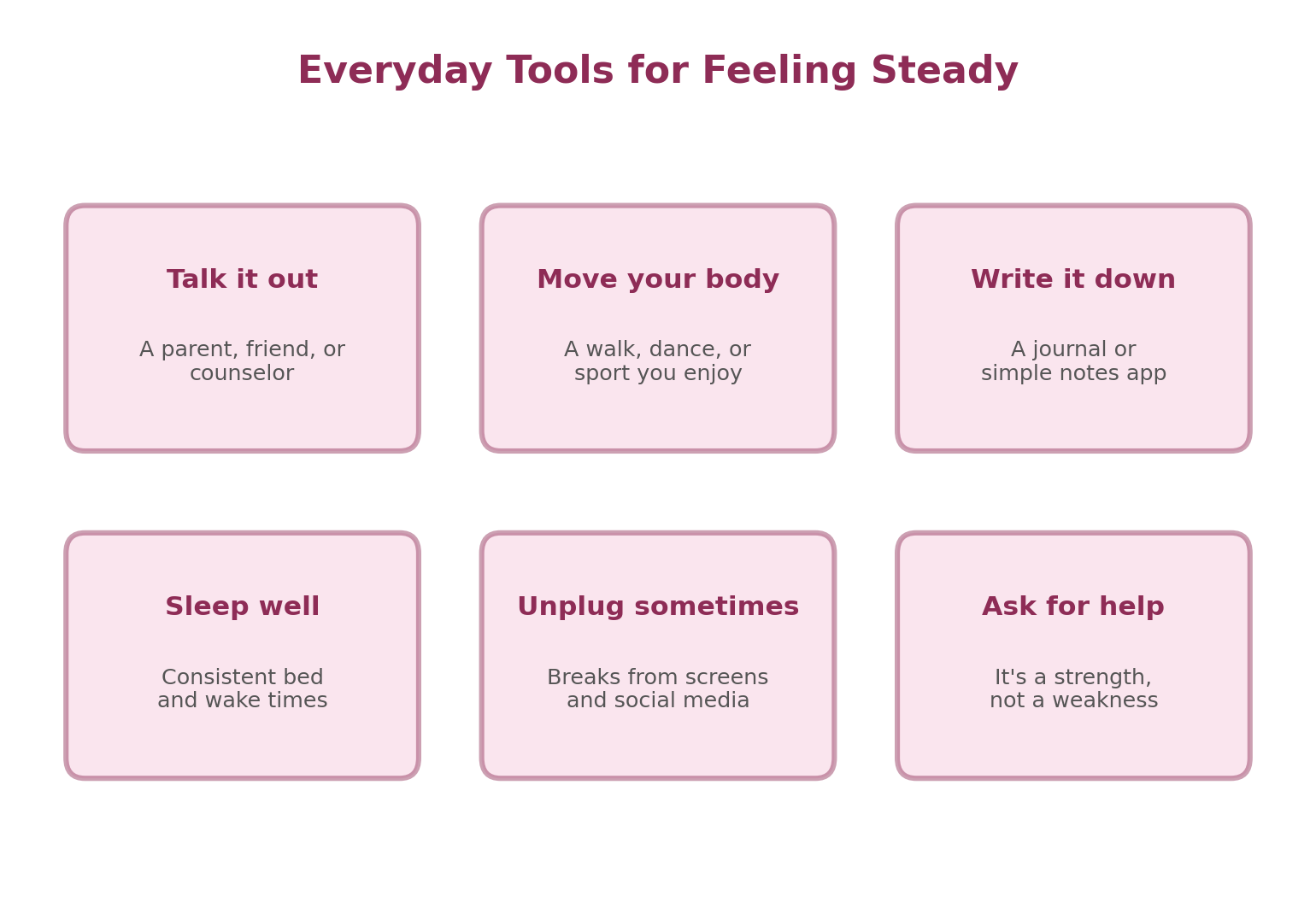
Small, steady habits that help most people feel more even.
What's a Typical Part of Growing Up
- Mood shifting more than it used to, sometimes tied to your cycle, sometimes not.
- Feeling more self-conscious about your changing body.
- Wanting more privacy and independence from parents.
- Friendships feeling more intense or more complicated.
When to Reach Out for Extra Support
- Sadness, worry, or irritability that lasts most days for two weeks or more.
- Losing interest in things you used to enjoy.
- Big changes in sleep or appetite that last more than a few days.
- Feeling hopeless, or like you can't cope.
If any of this sounds like you, please tell a parent, school counselor, or doctor. Reaching out isn't a sign of weakness, it's the same sensible move as seeing a doctor for a physical symptom that isn't going away.
If You're Struggling Right Now
- You deserve support, and you don't have to figure it out alone. Talking to a parent, school counselor, or doctor is a strong, sensible next step.
Educational Health & Safety Notice
Period Talk provides general educational health information only and is not a substitute for professional medical advice, diagnosis, or treatment. Always consult a qualified healthcare provider for personalized medical concerns.
Authority & Emergency: Aligned with evidence-based guidelines from international health organizations (ACOG, NHS, WHO, FOGSI). If you think you may be experiencing a medical emergency, seek urgent medical care or contact your local emergency service immediately.